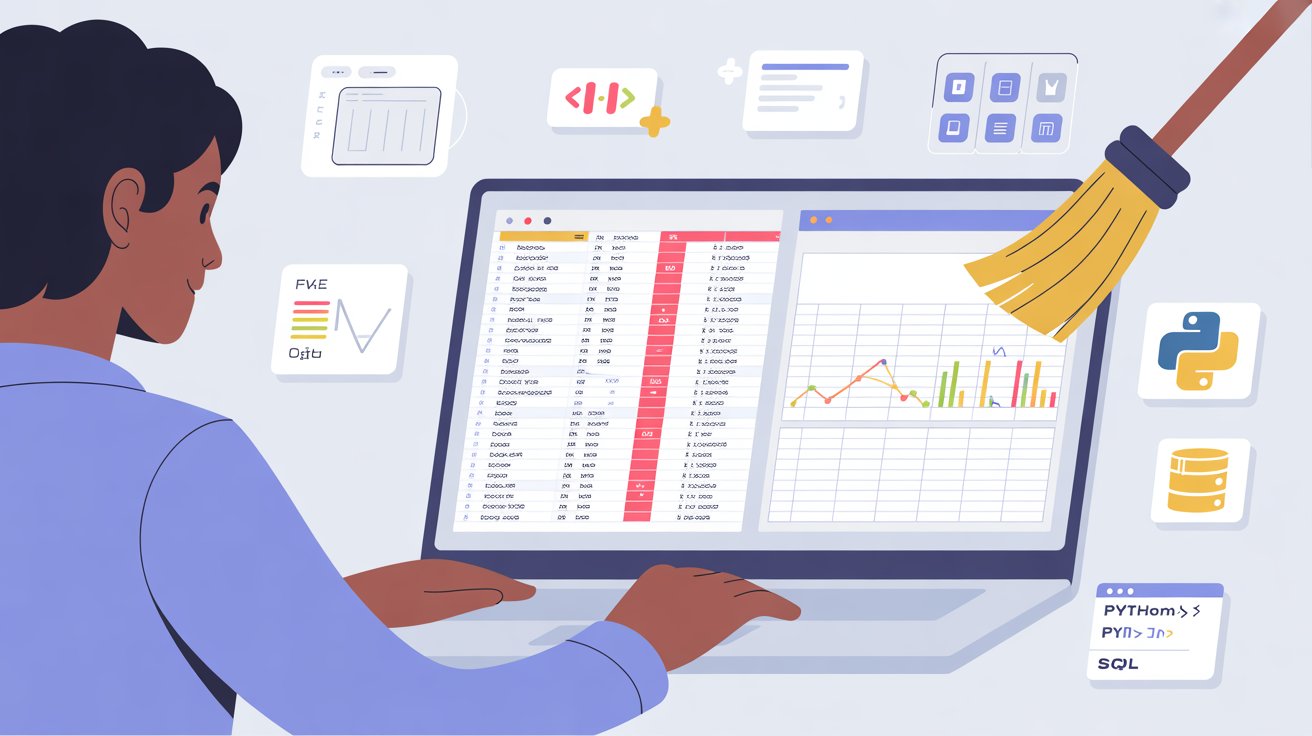
In the world of data analytics, insights are only as reliable as the data behind them. No matter how advanced your dashboards, models, or visualizations are, poor-quality data can invalidate results and damage decision-making. This is why data cleaning is considered one of the most critical skills for any data analyst—especially for beginners and junior professionals.
Industry studies consistently show that analysts spend 60–80% of their time cleaning and preparing data. Employers actively look for candidates who understand data cleaning techniques and can work confidently with messy, real-world datasets. If you’re aspiring to build a career in analytics, mastering these techniques is non-negotiable.
Below are the essential data cleaning techniques every analyst should master, along with why they matter in real job scenarios.
1. Handling Missing Values Effectively
Missing data is one of the most common challenges analysts face. Blank fields, null values, or incomplete records can distort analysis if left untreated.
Common approaches include:
-
Removing rows or columns with excessive missing values
-
Imputing values using mean, median, or mode
-
Forward-fill or backward-fill for time-series data
-
Using domain knowledge to make informed replacements
Good analysts don’t blindly delete missing data—they assess its impact and choose the most appropriate method based on the business context.
2. Removing Duplicate Records
Duplicate data often arises from multiple data sources, system glitches, or repeated entries. If not removed, duplicates can:
-
Inflate counts
-
Skew averages
-
Misrepresent trends
Analysts should be comfortable identifying duplicates using:
-
Unique identifiers (IDs)
-
Full-row comparisons
-
Conditional checks (e.g., same email, date, and transaction)
Whether you’re using Excel, SQL, Python (Pandas), or BI tools, deduplication is a must-have skill.
3. Standardizing Data Formats
Inconsistent formats are a silent data killer. Common examples include:
-
Dates stored in multiple formats (DD/MM/YYYY vs MM/DD/YYYY)
-
Text inconsistencies (India vs INDIA vs india)
-
Mixed units (USD vs INR, kg vs grams)
Standardization ensures that data can be aggregated, filtered, and analyzed correctly. Analysts should know how to:
-
Convert data types
-
Normalize text values
-
Apply consistent naming conventions
This step is especially important when merging datasets from different sources.
4. Correcting Data Entry Errors
Human-entered data often contains typos, spelling mistakes, and invalid values. Examples include:
-
Negative values where only positives make sense
-
Misspelled categories
-
Out-of-range numerical values
Analysts must validate data using:
-
Logical rules
-
Range checks
-
Lookup tables
-
Cross-field comparisons
Spotting and fixing these errors demonstrates attention to detail—a quality employers value highly.
5. Identifying and Treating Outliers
Outliers are values that significantly differ from the rest of the dataset. While some outliers indicate errors, others represent valid but extreme cases.
Common techniques to detect outliers include:
-
Box plots
-
Z-scores
-
Interquartile Range (IQR)
The key skill is deciding whether to remove, cap, transform, or keep outliers, depending on business relevance. For example, a sudden spike in sales could be an error—or a successful campaign.
6. Ensuring Data Consistency Across Columns
Inconsistent relationships between columns can lead to flawed analysis. Examples:
-
Order date later than delivery date
-
Age not matching date of birth
-
Country and currency mismatches
Cross-column validation helps ensure logical integrity in the dataset. This is especially critical in financial, customer, and operational data.
7. Cleaning Text Data for Analysis
Text data often needs additional preprocessing, such as:
-
Removing extra spaces
-
Fixing capitalization
-
Removing special characters
-
Handling synonyms and abbreviations
For analysts working with survey responses, customer feedback, or logs, text cleaning is an increasingly valuable skill.
8. Documenting the Data Cleaning Process
Good analysts don’t just clean data—they document what they did and why. This ensures:
-
Transparency
-
Reproducibility
-
Easier collaboration with stakeholders
Clear documentation is often what separates junior analysts from strong professionals in real job environments.
Why Data Cleaning Skills Matter for Jobs
Recruiters and hiring managers prioritize candidates who can handle messy datasets without constant supervision. Data cleaning demonstrates:
-
Analytical thinking
-
Problem-solving ability
-
Practical, job-ready skills
For entry-level roles, data cleaning proficiency is often more important than advanced modeling.
Build These Skills with a Real Analytics Role
If you’re learning data cleaning techniques and looking to apply them in a professional environment, a junior analytics role is the perfect next step.
👉 Explore this Junior Data Analyst opportunity and apply here:
https://digitalsolutiontech.com/job/hiring-junior-data-analyst-hypersonic-inc/
Mastering data cleaning today can open the door to a successful analytics career tomorrow.