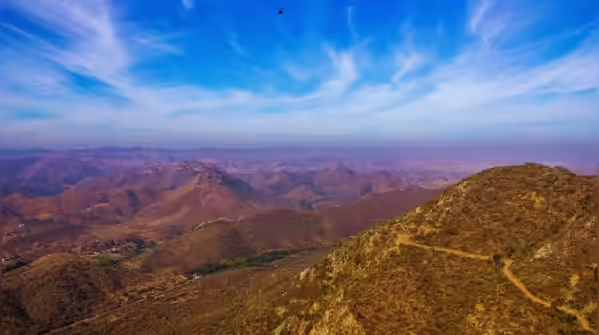
The Aravalli Hills, one of the oldest mountain ranges in the world, have once again come into the national spotlight. Estimated to be over 2 billion years old, the Aravallis are not just a geological marvel but also a critical ecological shield for North India. Recent discussions around environmental degradation, mining activities, urban expansion, and climate resilience have brought renewed attention to why protecting this ancient range is essential for India’s future.
What Are the Aravalli Hills?
The Aravalli Range stretches approximately 800 kilometres, running from Gujarat through Rajasthan to Haryana and Delhi. Unlike younger mountain systems such as the Himalayas, the Aravallis are heavily eroded, with gentle slopes and low elevations. Despite their reduced height, their environmental and climatic importance far outweighs their physical size.
Geologists consider the Aravallis among the oldest fold mountains on Earth, formed long before complex life evolved. Over billions of years, erosion has reshaped them, but their core structure continues to influence soil stability, groundwater flow, and regional climate.
Why Are the Aravalli Hills in the News?
The Aravallis are currently in the news due to growing concerns over:
-
Illegal mining and quarrying
-
Deforestation and land degradation
-
Rapid urbanisation in NCR regions
-
Weak enforcement of environmental regulations
-
Rising desertification in western India
Environmentalists and policymakers warn that continued destruction of the Aravalli ecosystem could have severe consequences for North India’s climate, water security, and air quality.
Why Are the Aravalli Hills Crucial for North India?
1. Natural Barrier Against Desertification
The Aravalli Range acts as a natural barrier preventing the eastward expansion of the Thar Desert. Without this barrier, desertification could rapidly spread into fertile regions of Haryana, Delhi, and western Uttar Pradesh.
As vegetation cover decreases due to mining and construction, sandstorms and arid conditions are becoming more frequent, directly affecting agriculture and human settlements.
2. Groundwater Recharge and Water Security
The rocky formations of the Aravallis play a key role in groundwater recharge. Rainwater percolates through fractures in the hills, replenishing aquifers that supply water to millions across Rajasthan, Haryana, and Delhi.
Destruction of hill structures disrupts this natural recharge process, contributing to falling groundwater levels—a major concern for North India, where water stress is already severe.
3. Regulating Climate and Rainfall Patterns
Although not tall, the Aravallis influence local weather systems. They help trap moisture and regulate wind patterns, contributing to rainfall in surrounding regions. Their degradation can intensify heatwaves, droughts, and erratic monsoon behaviour, all of which have been increasingly observed in recent years.
4. Improving Air Quality in NCR
The Aravalli forests act as a green lung for the National Capital Region (NCR). They absorb pollutants, reduce dust storms, and help moderate temperatures.
As forest cover declines, cities like Delhi, Gurugram, and Faridabad experience worsening air pollution, particularly during summer and winter months.
5. Biodiversity Hotspot
The Aravalli ecosystem supports a wide range of flora and fauna, including leopards, jackals, hyenas, and numerous bird species. It also hosts drought-resistant plant species vital for ecological balance.
Loss of biodiversity weakens ecosystem resilience, making the region more vulnerable to climate extremes.
Legal and Environmental Challenges
Despite Supreme Court rulings banning mining in parts of the Aravallis, loopholes and inconsistent enforcement have allowed continued exploitation. Reclassification of forest land, illegal construction, and weak monitoring mechanisms remain significant challenges.
Experts argue that protecting the Aravallis requires:
-
Stronger legal safeguards
-
Restoration of degraded forest areas
-
Sustainable urban planning
-
Community involvement in conservation
Why Protection Is Urgent Now
With climate change accelerating, the Aravalli Hills represent one of North India’s last natural defences against environmental collapse. Their loss would amplify problems such as:
-
Extreme heat events
-
Water shortages
-
Declining agricultural productivity
-
Increased pollution and health risks
Preserving the Aravallis is not just an environmental issue—it is a public health, economic, and national security concern.
Conclusion
The renewed focus on the Aravalli Hills highlights a critical truth: ancient ecosystems are irreplaceable. This 2-billion-year-old mountain range is far more than a geological relic; it is a lifeline for North India.
Protecting the Aravallis through sustainable policies, strict enforcement, and public awareness is essential to ensure climate stability, water security, and livable cities for future generations. The current attention offers a crucial opportunity to act—before irreversible damage is done.