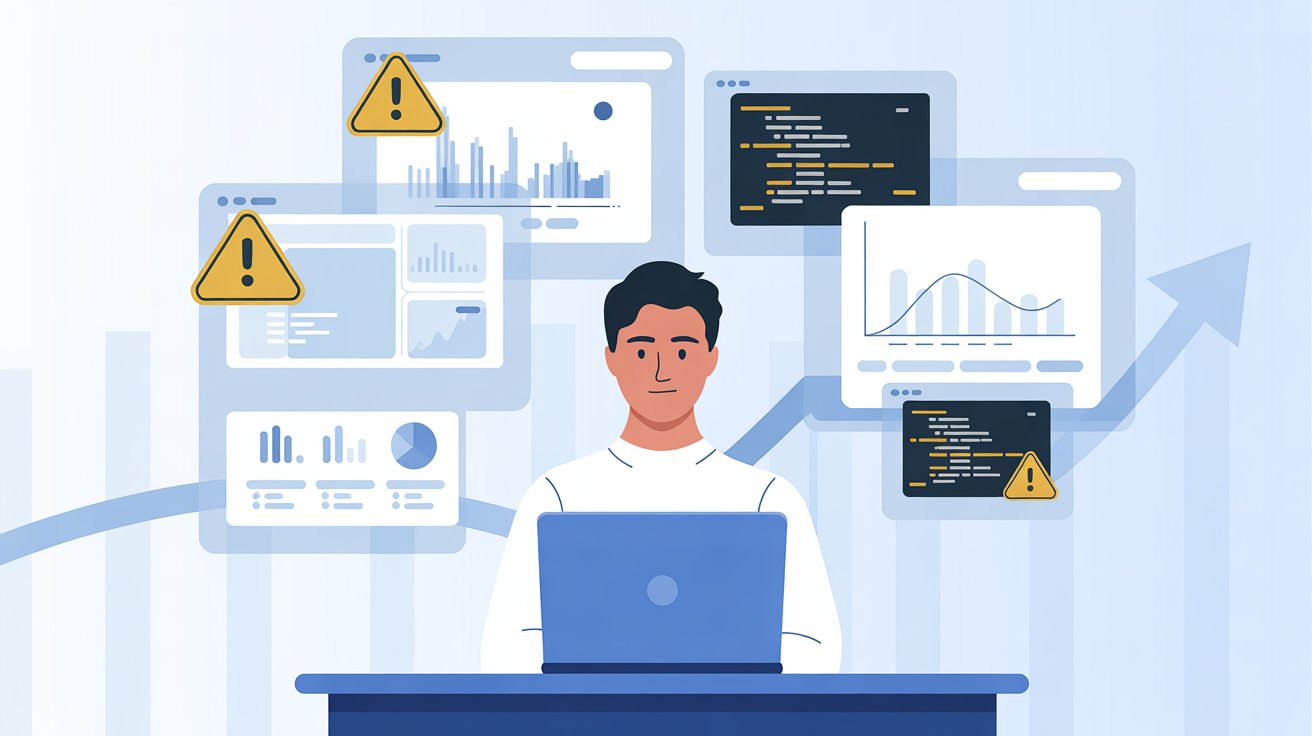
If you’re considering a career in data analytics or have recently started applying for junior data analyst roles, you may be wondering what a typical workday actually looks like. While job descriptions often list tools and skills, they rarely show how those skills are used in real, day-to-day work.
In this guide, we walk you through a day in the life of a junior data analyst, from the moment the workday begins to end-of-day reporting. Whether you’re a student, fresher, or early-career professional, this breakdown will help you understand expectations, workflows, and how junior analysts add real business value.
Morning: Reviewing Data & Setting Priorities
Most junior data analysts start their day by checking emails, dashboards, and task boards. This is when you review:
-
Data refresh statuses from overnight pipelines.
-
New requests from stakeholders or managers
-
Feedback on reports or dashboards shared earlier.
You may also attend a short stand-up meeting with your team. During this meeting, analysts discuss what they worked on yesterday, what they’ll work on today, and any blockers they’re facing.
At the junior level, your tasks are often well-defined. Your manager or senior analyst might assign you activities such as cleaning a dataset, validating numbers in a report, or updating a dashboard.
Mid-Morning: Data Cleaning & Preparation
A large part of a junior data analyst’s day is spent on data cleaning and preparation. Raw data is rarely perfect, and before any analysis can happen, it needs to be structured and validated.
Typical tasks include:
-
Removing duplicates and handling missing values
-
Formatting dates, currencies, and categorical fields
-
Joining data from multiple sources using SQL
-
Checking for inconsistencies or outliers
This stage is crucial because accurate analysis depends on clean data. Junior analysts often use tools like Excel, SQL, Google Sheets, or Python under the guidance of senior team members.
Late Morning: Running Analysis & Writing Queries
Once the data is ready, you’ll begin answering specific business questions. For example:
-
How did yesterday’s operations perform?
-
Which region showed a drop in key metrics?
-
Are there trends or anomalies in the data?
You’ll typically write SQL queries to extract insights, calculate metrics, or compare performance over time. As a junior analyst, you’re expected to focus on accuracy, documentation, and learning best practices rather than speed alone.
This is also when you start learning how data connects to business outcomes—understanding why stakeholders need certain metrics, not just how to calculate them.
Afternoon: Reporting & Dashboard Updates
After lunch, many junior data analysts work on reports and dashboards. This could involve:
-
Updating daily or weekly operational reports
-
Refreshing dashboards in tools like Power BI or Tableau
-
Adding comments or summaries to explain the data
At this level, you may not design dashboards from scratch, but you’ll often maintain existing ones. Clear labelling, consistent formatting, and correct calculations are essential, as decision-makers rely on these reports.
You may also send your findings to senior analysts or managers for review, learning how to present data clearly and concisely.
Late Afternoon: Stakeholder Communication & Learning
Towards the end of the day, you might join review meetings where analysts explain insights to operations, sales, or product teams. As a junior analyst, your role is often to support these discussions—sharing numbers, clarifying assumptions, or updating data live if needed.
You’ll also spend time:
-
Reviewing feedback on your work
-
Improving queries or reports based on suggestions
-
Learning new tools, shortcuts, or business concepts
Continuous learning is a key part of a junior data analyst’s role. Every task helps you build confidence, technical skills, and business understanding.
End of Day: Documentation & Planning Ahead
Before logging off, junior analysts usually document their work. This includes:
-
Saving queries with clear names
-
Updating task trackers
-
Writing short summaries of completed analysis
Good documentation ensures continuity and helps teams collaborate efficiently. It also prepares you for more responsibility as you progress in your career.
Final Thoughts
A junior data analyst’s day is structured, analytical, and learning-focused. You’ll spend time working with data, collaborating with teams, and developing the skills needed to grow into more advanced analytics roles. If you enjoy problem-solving, working with numbers, and turning data into insights, this career path offers strong long-term potential.
👉 Explore current junior-level data analyst opportunities here:
https://digitalsolutiontech.com/job/data-analyst-operations/